Pool heater issues rarely happen “all at once.” Most problems give off small warning signs days or weeks before a full shutdown. Below, we’ll cover the most common red flags, quick checks you can do safely, and when to call for help to keep your season on track in New Jersey.
If you’re already juggling water balance, cleaning, and equipment care, pairing heater awareness with a consistent plan like weekly pool maintenance in Mercer, Monmouth, or Ocean County, NJ can make pool downtime prevention near New Jersey much easier.
What Are The Earliest Signs Of Pool Heater Issues?
Early pool heater issues often show up as longer heat-up times, temperature swings, odd noises, or a heater that cycles on and off more than usual. If you catch these signs early, you can often avoid a complete no-heat situation and reduce wear on your pump and other equipment. For homeowners and facilities, pairing quick checks with preventative and emergency pool services helps stop small problems from turning into downtime.
Once you notice a change, document it: water temperature, outdoor temperature, heater set point, and any error code. That short “history” is incredibly useful if a technician needs to diagnose the system later.
How A Pool Heater Works (And Why Small Changes Matter)
A pool heater is a system that transfers heat into your pool or spa water using gas, electricity (heat pump), or solar energy. It relies on steady water flow, clean filtration, and correct water chemistry to operate safely and efficiently.
Because the heater depends on other parts of the circulation system, a “heater problem” can start as a dirty filter, low water flow, or poor water balance. That’s why heater troubleshooting usually overlaps with general care covered in professional pool and spa services.
Common Heater Problems Serving Mercer County: Symptoms You Shouldn’t Ignore
Whether you manage a backyard pool or a commercial facility, these are the symptoms we see most often with heater problems serving Mercer County and surrounding areas.
- Water isn’t reaching the set temperature, even after hours of run time
- Heater turns on briefly, then shuts off (short cycling)
- Display shows error codes or warning lights
- Unusual sounds like rumbling, whistling, or clicking
- Stronger-than-normal chemical smell near equipment (can signal airflow or combustion issues for gas heaters)
- Moisture, corrosion, or rust around the heater cabinet or plumbing connections
If you’re also seeing cloudy water, scaling, or debris load, check your broader routine against a structured guide like the weekly pool maintenance checklist. Heater performance and water condition are tightly connected.
Why Is My Pool Heater Turning On And Off Repeatedly?
This is one of the most common pool heater issues—and one of the easiest to overlook because the heater “still works” sometimes.
Short cycling: what it usually means
Short cycling can happen when water flow is restricted, the heater’s safety sensors detect overheating, or the thermostat is reading inconsistently. In real-world terms, the heater starts, struggles to run steadily, then shuts down to protect itself.
Start with the simplest, safest checks:
- Confirm the pump is running and the water level is high enough for proper skimming
- Check skimmer and pump baskets for debris
- Look at filter pressure—an unusually high reading can mean the filter needs cleaning/backwashing
- Make sure return jets feel strong and consistent
If cycling continues, it’s smart to have a technician evaluate the heater and circulation system together. Ongoing cycling can cause more wear than a single hard failure and lead to avoidable pool downtime prevention near New Jersey.
What Should You Check First When You Suspect Pool Heater Issues?
1) Water flow and filtration
Low flow is one of the fastest ways to create heater trouble. A clogged filter, closed valve, dirty baskets, or partially blocked line can all reduce flow enough to trip safety sensors.
If you want a consistent baseline, ongoing service like weekly maintenance helps keep filters, baskets, and water balance from drifting into the danger zone where heaters struggle.
2) Water chemistry (especially scale and corrosion risk)
Heaters are sensitive to water balance. When chemistry is off, internal parts can scale up (mineral buildup) or corrode, both of which reduce heating efficiency and can trigger failures.
- High calcium hardness and high pH can contribute to scale on heat exchangers
- Low pH and low alkalinity can increase corrosion risk
- High sanitizer levels can be harsh on components if not managed correctly
If you’ve been unsure whether your routine is enough, reading about the real cost of skipping pool maintenance can help connect the dots between small neglect and bigger repair bills.
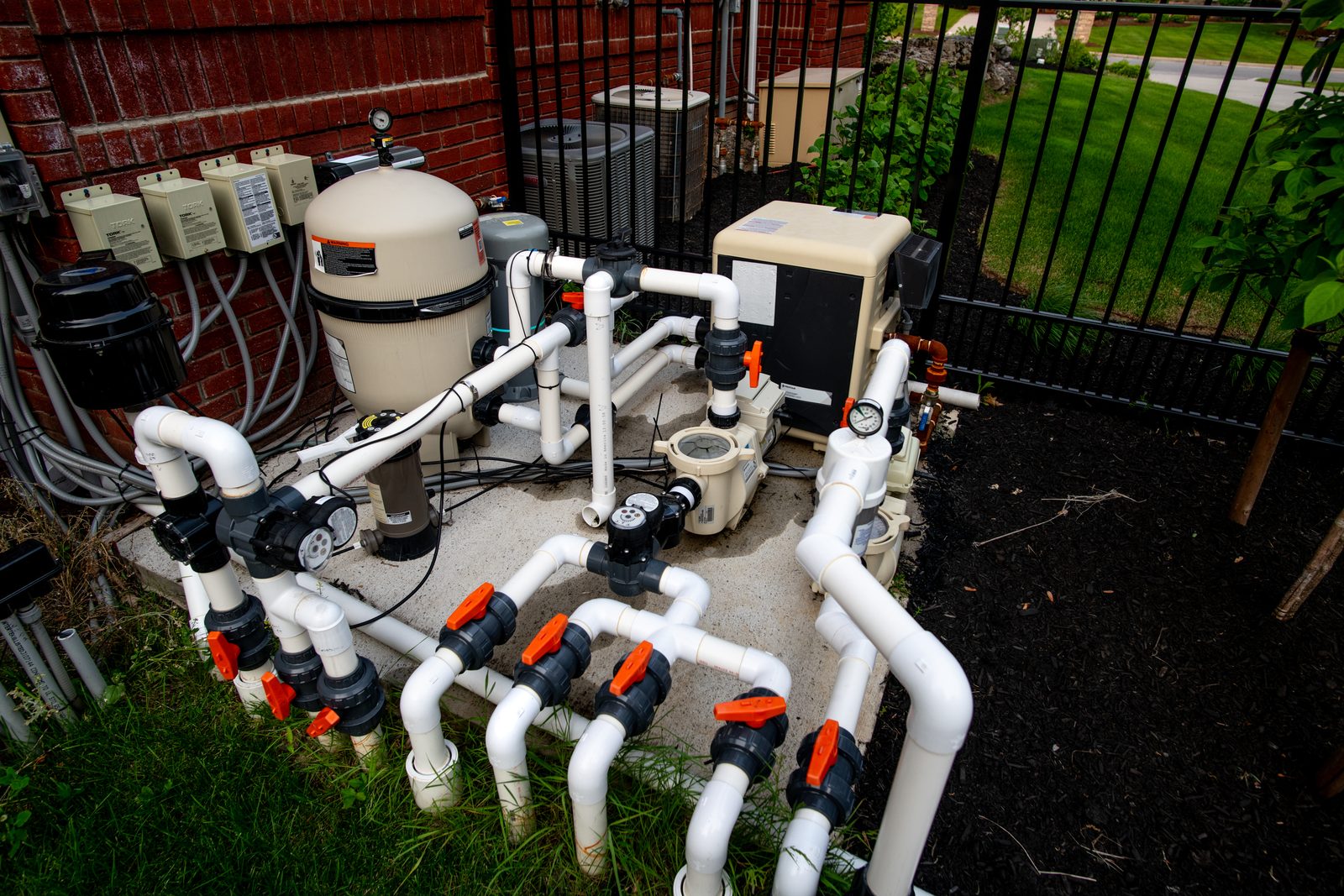
3) Visual and environmental checks around the equipment pad
Look for signs of nesting, leaves blocking airflow, or water dripping onto electrical components. For gas heaters, proper airflow and venting are critical for safe operation—if anything looks off, stop and call a pro rather than experimenting.
How Do Spa Heating Problems Show Up Differently Than Pool Heater Issues?
Spa heating problems often appear faster because the water volume is smaller and users expect a quick temperature rise. If your spa suddenly takes much longer to heat or can’t hold temperature, that’s a strong early warning.
Other common spa-specific clues include:
- Temperature overshoots (too hot) then drops quickly
- Heater works in pool mode but not spa mode (or vice versa)
- Problems after switching valves between pool and spa
If your household uses a hot tub instead of a spa spillover, similar heating symptoms can be tied to circulation, sensors, or scaling. Our hot tub repair and maintenance in NJ team often finds that small water-care corrections prevent bigger heater repairs later.
When Is A Heater Issue An Emergency Versus A Maintenance Item?
Some pool heater issues can wait a day or two. Others should be treated as urgent because they can affect safety or cause additional equipment damage.
Call for service promptly if you notice:
- Any smell of gas near a gas heater
- Tripped breakers that keep tripping after reset
- Water leaking from the heater cabinet (not just condensation)
- Burning smell, visible soot, or scorching
- Error codes that immediately return after basic flow checks
For everything else—like longer heat times or mild cycling—schedule service before it becomes peak-season downtime. That’s exactly what preventative service is for: fixing small failures before they cascade.
How Can You Reduce Pool Downtime With A Simple Weekly Routine?
Preventing pool downtime is less about one “magic” step and more about consistency. Heaters perform best when the circulation system is clean, water chemistry is stable, and small issues are caught early.
A practical weekly routine includes:
- Empty skimmer and pump baskets
- Check filter pressure and clean/backwash as needed
- Test and balance water (pH, alkalinity, sanitizer, calcium hardness)
- Listen for new noises at startup and shutdown
- Scan for drips, rust, or dampness around unions and valves
If you’d like a printable guide you can keep near your equipment, the weekly maintenance checklist is a great starting point. And if you prefer not to manage it yourself, exploring ongoing pool maintenance services can help keep heater performance predictable all season.
Frequently Asked Questions About Pool Heater Issues
Can dirty filters cause pool heater issues?
Yes. A dirty or clogged filter can restrict water flow, which may trigger heater safety shutoffs or cause short cycling. If your heater is acting up, checking baskets and filter pressure is a smart first step. Regular weekly pool maintenance in Mercer, Monmouth, or Ocean County, NJ helps prevent flow-related heater problems.
Why does my heater work some days but not others?
Intermittent heating often points to borderline conditions: variable water flow, a sensor starting to fail, or chemistry issues that are causing scaling over time. Weather can also expose a weak system because heaters need to work harder on cooler days. Logging error codes and conditions helps a technician pinpoint the cause faster.
Do spa heating problems mean the heater is failing?
Not always. Spa heating problems can be caused by valve settings, flow restrictions, or automation issues that affect spa mode only. However, because spas demand faster heating, they may reveal early pool heater issues sooner than the pool does. If the spa can’t maintain temperature, it’s worth scheduling service before it becomes full downtime.
Is it safe to keep running the heater if it’s making noise?
It depends on the noise, but new or worsening sounds should be taken seriously. Clicking or repeated ignition attempts, rumbling, or loud vibrations can indicate airflow, combustion, or internal component problems. If the sound is new, it’s best to shut the heater off and arrange professional diagnostic service.
Stop Heater Problems Before They Cost You The Weekend
If you’re noticing pool heater issues like longer heat-up times, short cycling, or spa heating problems, addressing them early is the simplest form of pool downtime prevention near New Jersey. For homeowners looking for pool maintenance near Lakehurst, NJ or for facilities dealing with heater problems serving Mercer County, we recommend scheduling an evaluation before the heater fails completely.
Call Gorlin Pools & Spas at (732) 323-8200 or reach out through our contact page to get help with troubleshooting, repairs, and a maintenance plan that keeps your water comfortable and your season running smoothly.