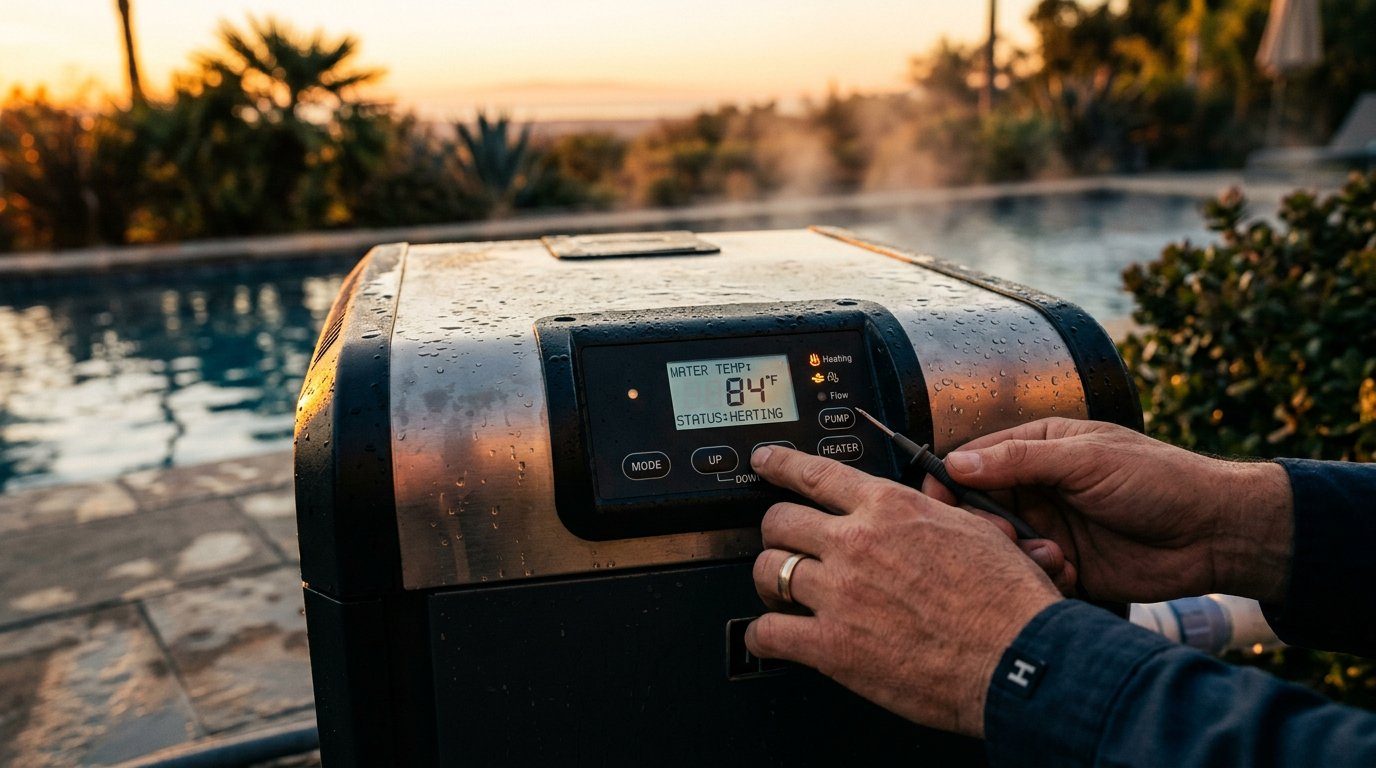
Pool heaters work hardest when you need them most: during peak swim season. With the right pool heater maintenance in Lakehurst, NJ, you can reduce mid-summer failures, keep water comfortable, and avoid last-minute service calls when schedules are packed.
Below, we’ll walk through the most common causes of heater breakdowns, what to check weekly, and when a professional inspection in NJ is the smarter move.
Why Pool Heaters Break Down Most Often During New Jersey Summers
Summer is when heaters face the longest run times, higher humidity, and frequent on/off cycling as weather swings between hot days and cool nights. Add sunscreen, pollen, and storm debris, and a heater can start operating under stress even if the pool looks clean.
In many cases, the heater is not the only issue. Water balance, circulation, and dirty filters can create conditions that shorten heater life. If you’re already on a routine plan like weekly pool maintenance, you’re ahead of the game because heater problems are often caught early.
How Do You Prevent Pool Heater Breakdowns in the Middle of Summer?
To prevent pool heater breakdowns, keep water chemistry balanced, maintain steady water flow through the system, and address small performance changes right away (like slower heating or unusual cycling). Pair basic weekly checks with a professional pool heater inspection in NJ before peak season to catch scaling, corrosion, and safety issues early.
That quick plan works because most heater failures come from avoidable root causes: restricted flow, dirty components, or chemical imbalance. If you want a broader view of system care beyond the heater, start with our pool and spa services to understand how maintenance, repairs, and seasonal support fit together.
Summer Pool Heater Care Starts With the Basics: Flow, Filter, and Water Balance
Pool heater maintenance is the routine of checking heater operation, water flow, and water chemistry so the unit can heat efficiently without scaling, corrosion, or safety lockouts.
Here are the three fundamentals that make the biggest difference for summer pool heater care:
- Water flow: A heater needs consistent flow to prevent overheating and shutdowns. Low flow can be caused by clogged baskets, dirty filters, or a failing pump.
- Filtration: A dirty filter reduces flow and can cause the heater to cycle, trip, or heat unevenly.
- Water chemistry: Unbalanced water can scale the heat exchanger or corrode internal parts over time.
If you want an easy routine to follow each week, use the weekly maintenance checklist as a baseline and add the heater-specific checks below.
Weekly Checklist: Simple Steps to Keep Your Pool Heater Running
These homeowner-friendly checks take only a few minutes and often reveal the early warning signs before a full breakdown occurs.
- Confirm strong return flow at the pool returns while the heater is on.
- Empty skimmer and pump baskets and confirm lids are sealed properly.
- Check the filter pressure gauge; if pressure is rising quickly, the heater may be starving for flow.
- Listen for changes: louder fan noise, rapid on/off cycling, or “struggling” starts.
- Look for water around the heater pad and nearby plumbing (even small leaks matter).
- Monitor how long it takes to reach temperature compared with last week.
For pools that see heavy use, storms, or lots of landscaping debris, weekly checks are a must. If you prefer hands-off consistency, weekly pool maintenance can catch issues like rising filter pressure or chemistry drift before they cascade into heater trouble.
What Are the Early Warning Signs Your Heater Is About to Fail?
Many heaters don’t die suddenly; they “whisper” first. Catching the signs early is one of the best pool maintenance tips in New Jersey for avoiding emergency calls in July.
Watch for:
- Water not reaching set temperature (or taking much longer than normal)
- Short-cycling (turning on and off repeatedly)
- Error codes or frequent resets
- Unusual noises (rattling, whining, banging, or loud fan operation)
- Rust, soot, or corrosion around the cabinet or vents
- A strong “chemical” smell near equipment (especially after shocking the pool)
If any of these show up, it’s usually more cost-effective to schedule preventative and emergency services rather than pushing through until it becomes a no-heat situation.
How Water Chemistry Impacts Heaters (And Why “Clear” Water Can Still Be a Problem)
Clear water is not always balanced water. A pool can look perfect while the chemistry slowly damages heater components.
Chemistry issues that commonly contribute to heater problems include:
- Scaling: Minerals can deposit inside the heat exchanger, reducing heat transfer and forcing the heater to work harder.
- Corrosion: Aggressive water can eat away at internal parts and fittings over time.
- Chlorine spikes: Concentrated chemicals (especially when added improperly) can stress metals and sensors.
If you’re not sure whether your maintenance routine is protecting your equipment, a structured plan like weekly maintenance service helps keep chemistry and circulation aligned, which is the foundation of preventing equipment failures.
Is a Pool Heater Inspection in NJ Worth It Before Peak Swim Season?
Yes, a pool heater inspection in NJ is often worth it if your heater is aging, you’ve had water balance issues, or the unit is cycling more than usual. A preseason inspection can identify restricted airflow, scaling risk, gas or electrical concerns, and flow-related problems before the hottest weeks hit.
It’s also a smart step for new homeowners, families reopening a pool after inconsistent care, or anyone who had “mystery shutdowns” last year. If you’re already planning seasonal or ongoing support, exploring pool service options can help you combine heater checks with whole-system upkeep.
Common Summer Habits That Cause Heater Problems (And Easy Fixes)
Some breakdowns are caused by simple patterns that are easy to correct once you know what to look for.
- Running with a dirty filter: Set a reminder to clean/backwash based on your filter type and bather load.
- Turning the heater on right after heavy chemical dosing: Give chemicals time to circulate and dilute before heating.
- Blocking airflow: Keep plants, furniture, and storage items away from the heater’s vents and service panels.
- Ignoring small leaks: Leaks can cause corrosion, low flow, or air in the system that affects heater operation.
If you want a broader approach to avoiding costly mid-season surprises, it can also help to read the real cost of skipping pool maintenance and compare it to the time and expense of routine care.
Planning Ahead for Busy Weeks: When to Schedule Service
In New Jersey, heater issues often spike during heat waves and after major summer storms. That means the best time to act is when nothing is wrong yet.
Consider scheduling service when:
- You’re opening the pool and want reliable heat for early-season swimming
- Your heater is 7–10+ years old and has never been professionally evaluated
- You’ve seen recurring error codes, slow heat, or frequent cycling
- You’re hosting events and want stable water temperature
If you’re in Ocean County or nearby areas, you can also confirm coverage through our New Jersey service areas.
Next Steps: Get Ahead of Breakdowns Before the Next Heat Wave
If you’re trying to prevent pool heater breakdowns this summer, the best move is to combine weekly homeowner checks with professional support when warning signs appear. We can help you reduce downtime, protect your equipment investment, and keep your water comfortable all season long through preventative and emergency services and ongoing care options.
Call Gorlin Pools & Spas at 732-323-8200 to talk through what your heater is doing, or reach out through our contact us page to schedule service. If you already know you want help with seasonal planning or ongoing care, you can also request a free quote.
Common Questions About Preventing Pool Heater Breakdowns in New Jersey
How often should I do pool heater maintenance in Lakehurst, NJ during summer?
During summer, basic pool heater maintenance in Lakehurst, NJ should be checked weekly: baskets, filter pressure, return flow, and heating performance. A professional inspection is a smart preseason or mid-season step if the heater is older, cycling frequently, or heating more slowly than before.
What causes pool heaters to stop working after a storm?
Storm debris can clog skimmers, baskets, and filters, reducing flow and causing heater safety shutdowns. Power interruptions can also trigger error codes. After storms, confirm clean baskets, normal filter pressure, and strong circulation before restarting the heater. If problems continue, schedule service to prevent repeat shutdowns.
Is it safe to run my pool heater right after adding chemicals?
It depends on what you added and how you added it. Strong chemical doses that don’t circulate fully can create localized high concentrations that stress heater components. As a general practice, circulate water thoroughly after dosing and avoid heating immediately after heavy chemical additions, especially if chemistry has been unstable.
How do I know if I need a pool heater inspection in NJ or a full repair?
If the heater is producing heat but is slow, cycling, or throwing occasional codes, a pool heater inspection in NJ is often the best first step to diagnose flow, scaling, ventilation, and control issues. If the unit will not ignite, trips repeatedly, or shows signs of leaks or corrosion, repair is more likely.
Can weekly pool maintenance help prevent pool heater breakdowns?
Yes. Most breakdowns are tied to water flow and water balance, and weekly service helps keep both stable. Consistent skimming, basket cleaning, filter monitoring, and chemistry management reduce scaling, corrosion risk, and heater lockouts. Routine care also catches small performance changes before they become no-heat emergencies.