Pool equipment is built to handle years of continuous use. But at the Jersey Shore, it works harder than it does in most other environments. Salt air, humidity, and the concentrated demands of a busy summer season accelerate wear on pumps, filters, heaters, and automation systems in ways that inland pools simply do not experience to the same degree. Knowing when to repair a piece of equipment and when to replace it is one of the more practically valuable things a Jersey Shore pool owner can understand.
Pool Pumps
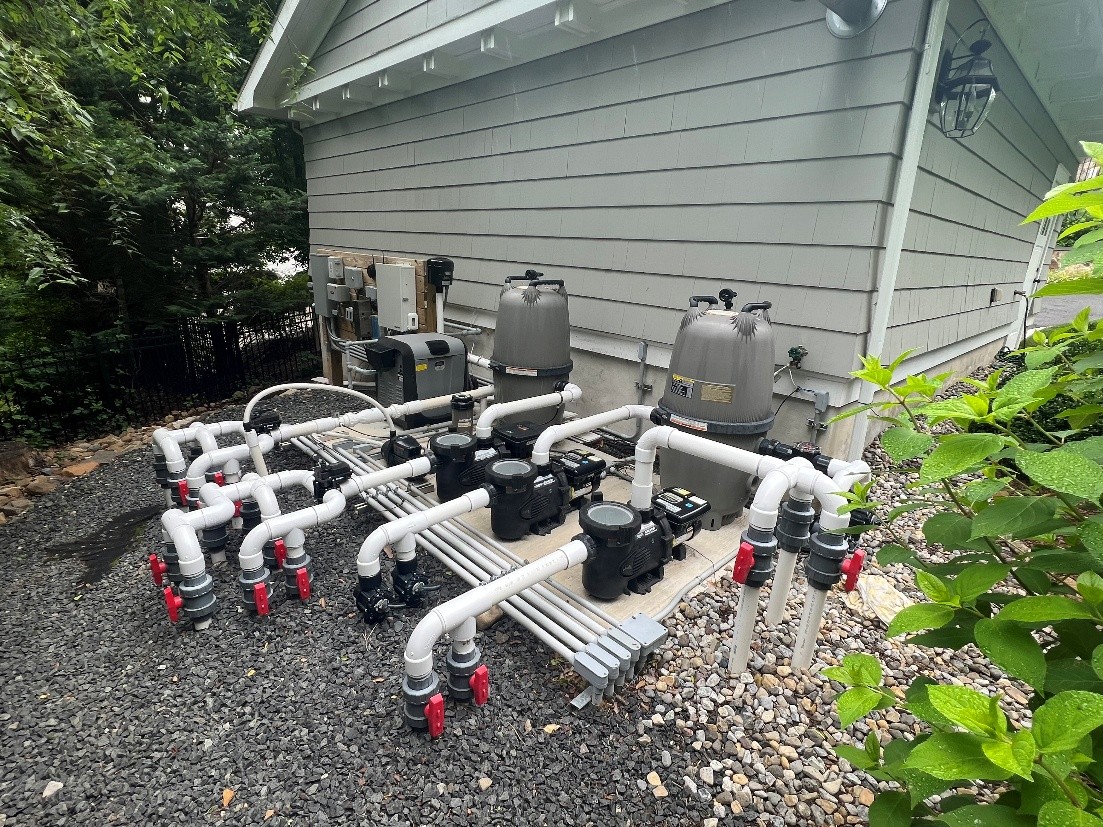
The pump is the engine of your pool’s circulation system. When it is functioning correctly, water moves through the filter efficiently, chemicals distribute evenly, and everything downstream performs as it should. When it is not, the effects show up quickly and broadly across water quality and overall pool performance.
Common signs that your pump needs attention include unusual noise during operation, difficulty holding prime, leaking around the housing, or a noticeable drop in water flow and circulation. Some of these issues are worth repairing on a pump that still has useful life remaining. A worn seal, a failing capacitor, or a clogged impeller are all serviceable problems in the right context. But a pump that is 8 to 10 years old and requiring repeated attention through the heart of the Jersey Shore summer is making a strong case for replacement.
Modern variable-speed pumps offer significant energy savings over older single-speed models. For Shore properties that run their systems hard through a busy season, that efficiency improvement translates into a meaningful reduction in operating costs that often justifies the investment within a season or two.
Filters
A properly maintained filter should deliver reliable performance for many years. When water clarity deteriorates despite balanced chemistry, or pressure readings fall consistently outside the normal operating range, the filter media or the unit itself may have reached the end of its useful life.
Sand media typically needs replacement every 5 to 7 years. Cartridge elements require more frequent attention. At the Jersey Shore, where pools deal with higher-than-average debris loads and the mineral content of salt air affects filtration over time, staying on top of filter maintenance and knowing when replacement makes more sense than continued repair is particularly important.
If the tank itself is cracked or internal components are failing, repair investment on an aging unit rarely makes financial sense. A new filter delivers better performance, comes with a fresh warranty, and eliminates the uncertainty of working around equipment that is already in decline.
Heaters
Heaters generally have a shorter service life than most other pool equipment, typically falling between 7 and 12 years depending on usage and water chemistry. At the Shore, where salt air accelerates corrosion on metal components, heaters can trend toward the shorter end of that range without consistent maintenance and proper water chemistry management.
Repeated error codes, difficulty reaching and maintaining set temperature, and escalating repair frequency are all indicators that replacement is the more financially sound decision. A current high-efficiency model costs less to operate, performs more reliably, and is far less likely to leave you without heat during the cooler evenings that are common at the Shore even in midsummer.
Automation and Lighting
Older control systems that are unreliable, unresponsive, or no longer supported by their manufacturer are worth replacing on practical grounds. Modern automation platforms offer remote monitoring and control, customizable scheduling, and system alerts that older panels cannot provide. For Shore properties that are not primary residences and may go several days without someone on site, the ability to monitor pool systems remotely and receive alerts when something needs attention has genuine practical value.
LED lighting upgrades are one of the more straightforward equipment improvements available, delivering meaningful energy savings and a noticeably improved look in and around the water at a relatively accessible cost.
A Practical Framework
If a repair costs more than half of what a full replacement would cost, and the equipment in question is already several years into its expected lifespan, replacement is almost always the better investment. You are not simply paying to fix something. You are paying to extend the life of a system that is already declining, with no improvement in efficiency or reliability to show for it.
Gorlin Pools helps Jersey Shore pool owners assess their equipment and make repair versus replacement decisions with confidence. If something is giving you trouble, reach out and we will take an honest look at what makes the most sense.