
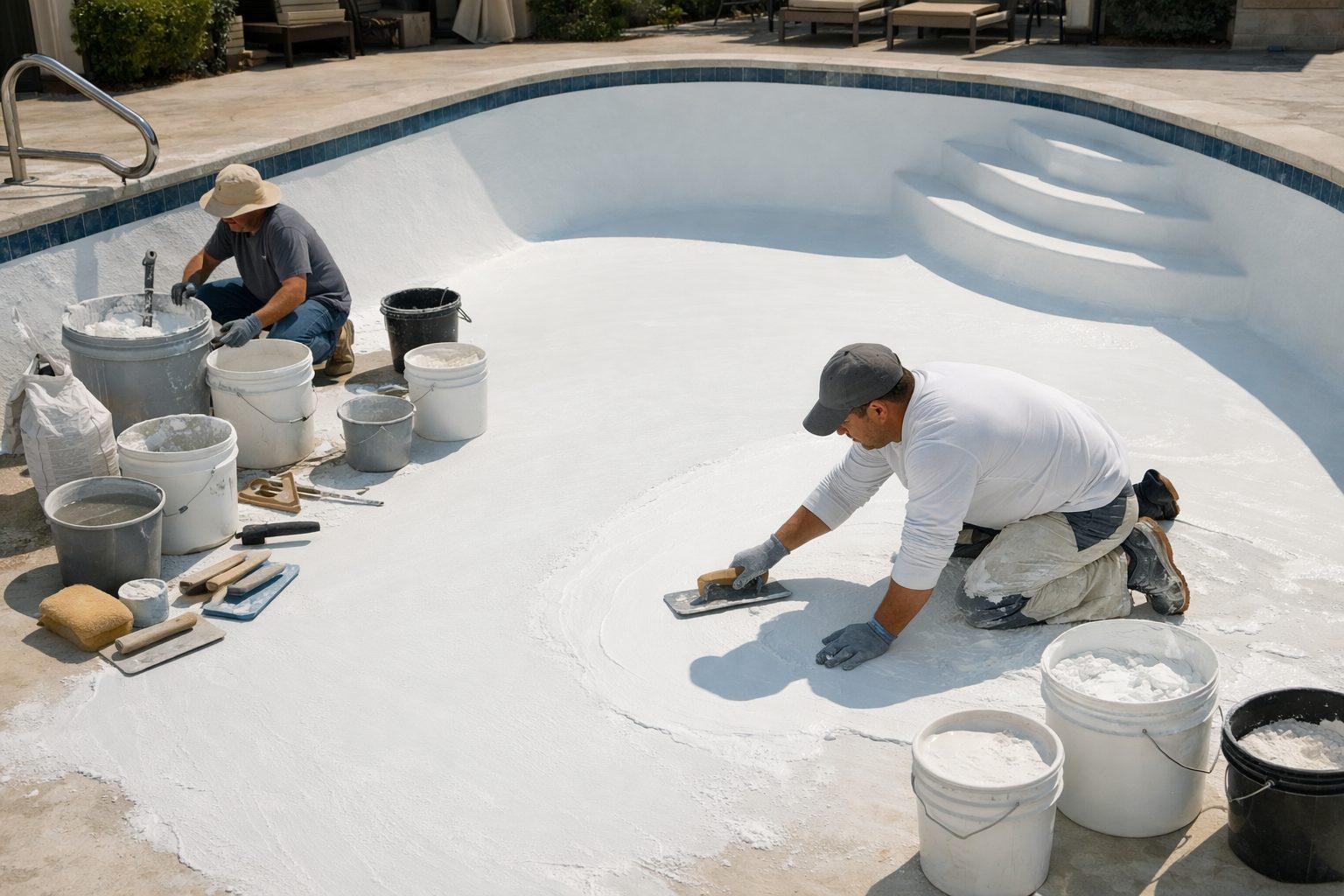
Pool plaster plays a major role in protecting your pool’s structure and maintaining smooth, comfortable surfaces. Over time, exposure to water chemistry, weather, and daily use can cause plaster to deteriorate. Knowing when to replaster—and how to approach the process—can help keep your pool safe, attractive, and functioning properly for years to come.
For homeowners and property managers maintaining pools and spas in NJ, understanding the basics of replastering is an important part of long-term pool care. With the right timing and professional service, replastering becomes a valuable investment that restores beauty, performance, and durability.
Why Pool Replastering Matters for Long-Term Pool Health
Pool plaster is the interior finish that seals the concrete shell of a pool. It creates a waterproof barrier while providing the smooth surface swimmers experience every day.
As plaster ages, it can develop rough spots, stains, cracks, or discoloration. These issues are not just cosmetic—they can affect water quality, safety, and the overall longevity of the pool structure.
Replastering is a key component of pool restoration and is often performed during larger projects such as Monmouth County pool remodeling or Mercer County pool restoration. When done properly, the process revitalizes the pool’s interior and supports better water chemistry balance.
For many pool owners, replastering is also an opportunity to modernize the look of the pool and ensure it remains enjoyable for years to come.
Signs Your Pool May Need Replastering
Pool plaster does not last forever. While lifespan can vary depending on maintenance and usage, most plaster finishes eventually show signs of wear.
Common indicators that replastering may be necessary include:
- Rough or abrasive surfaces that feel uncomfortable on swimmers’ feet
- Visible cracks, pitting, or flaking plaster
- Persistent stains or discoloration that cannot be removed through cleaning
- Areas where the underlying concrete is becoming exposed
- Difficulty maintaining balanced water chemistry
Addressing these signs early helps prevent more extensive damage. During routine maintenance or inspections, experienced professionals can identify when resurfacing may be appropriate as part of broader Mercer County pool renovation projects.
The Pool Replastering Process Explained
Draining and Surface Preparation
The pool is first drained so technicians can access the entire interior surface. The existing plaster is then chipped or sandblasted to remove deteriorated material and create a clean bonding surface for the new finish.
Structural Evaluation
During this stage, technicians inspect the pool shell for cracks, structural issues, or plumbing concerns. If necessary, repairs can be completed before the new plaster is applied. This evaluation stage is similar to what occurs during a pool inspection in Lakehurst or other detailed service visits.
Applying the New Plaster Finish
Fresh plaster is applied evenly across the pool surface and carefully smoothed to create a uniform finish. Once the plaster cures, the pool is refilled and the water chemistry is gradually balanced to protect the new surface.
The result is a refreshed pool interior that looks cleaner, feels smoother, and performs better.
Key Benefits of Professional Pool Replastering
Replastering does more than improve appearance. It supports the long-term performance and safety of the pool.
Some of the most important benefits include:
- Restoring a smooth and comfortable swimming surface
- Protecting the structural integrity of the pool shell
- Improving water chemistry stability
- Enhancing the visual appeal of the pool
- Extending the lifespan of the pool system
These advantages are especially valuable for properties that rely on consistent water quality and reliability, including residential communities and facilities using commercial pool cleaning service programs.
When Replastering Fits Into a Larger Pool Renovation
Replastering is often completed as part of larger improvement projects. Many homeowners choose to combine resurfacing with upgrades such as tile replacement, coping repairs, or equipment updates.
During Monmouth County pool remodeling projects, for example, resurfacing may occur alongside improvements that modernize both the look and function of the pool area.
Combining these services allows pool owners to address multiple concerns at once and create a refreshed swimming environment that feels completely renewed.
Maintenance Tips That Help Extend Plaster Life
While replastering eventually becomes necessary for most pools, proper care can help extend the lifespan of the finish.
Some important maintenance habits include:
- Maintaining balanced water chemistry
- Scheduling regular cleaning and filtration maintenance
- Removing debris promptly to prevent staining
- Monitoring for early signs of plaster wear
- Scheduling professional inspections and service
Consistent care is essential for keeping pools and spas in NJ clean, safe, and visually appealing throughout the swimming season.
Protecting Your Investment With Expert Pool Service
Pool surfaces endure constant exposure to water, chemicals, and changing temperatures. Over time, replastering becomes an important part of maintaining a safe and beautiful swimming environment.
Working with experienced pool professionals ensures the process is performed correctly, with careful preparation, precise application, and proper water balancing after completion. This attention to detail helps extend the life of the new finish and keeps the pool functioning at its best.
Our team has spent decades helping homeowners and property managers throughout Monmouth, Ocean, Mercer, and Middlesex Counties maintain pristine pools through expert service, maintenance, and renovation solutions.
If you believe your pool may be showing signs of aging plaster or if you’re considering a renovation project, we’re here to help. Our experienced technicians can evaluate your pool and recommend the right next steps.
To schedule service or speak with our team, please visit our contact page to get in touch here.
How often does a pool need to be replastered?
Most plaster finishes last several years depending on water chemistry, maintenance, and usage. Over time, normal wear, chemical exposure, and environmental conditions can cause plaster to deteriorate, making replastering necessary to restore the pool’s interior surface and maintain proper water quality.
What are the signs that pool plaster is failing?
Common warning signs include rough surfaces, visible cracks or pitting, stubborn stains that do not respond to cleaning, and areas where the underlying concrete becomes visible. If these issues appear, a professional inspection can determine whether replastering or additional pool renovation services are recommended.
Can replastering be done as part of a pool renovation project?
Yes. Replastering is often completed during larger pool remodeling or restoration projects. Pool owners frequently combine resurfacing with tile replacement, coping updates, or equipment upgrades to improve both the appearance and long-term performance of their pool.