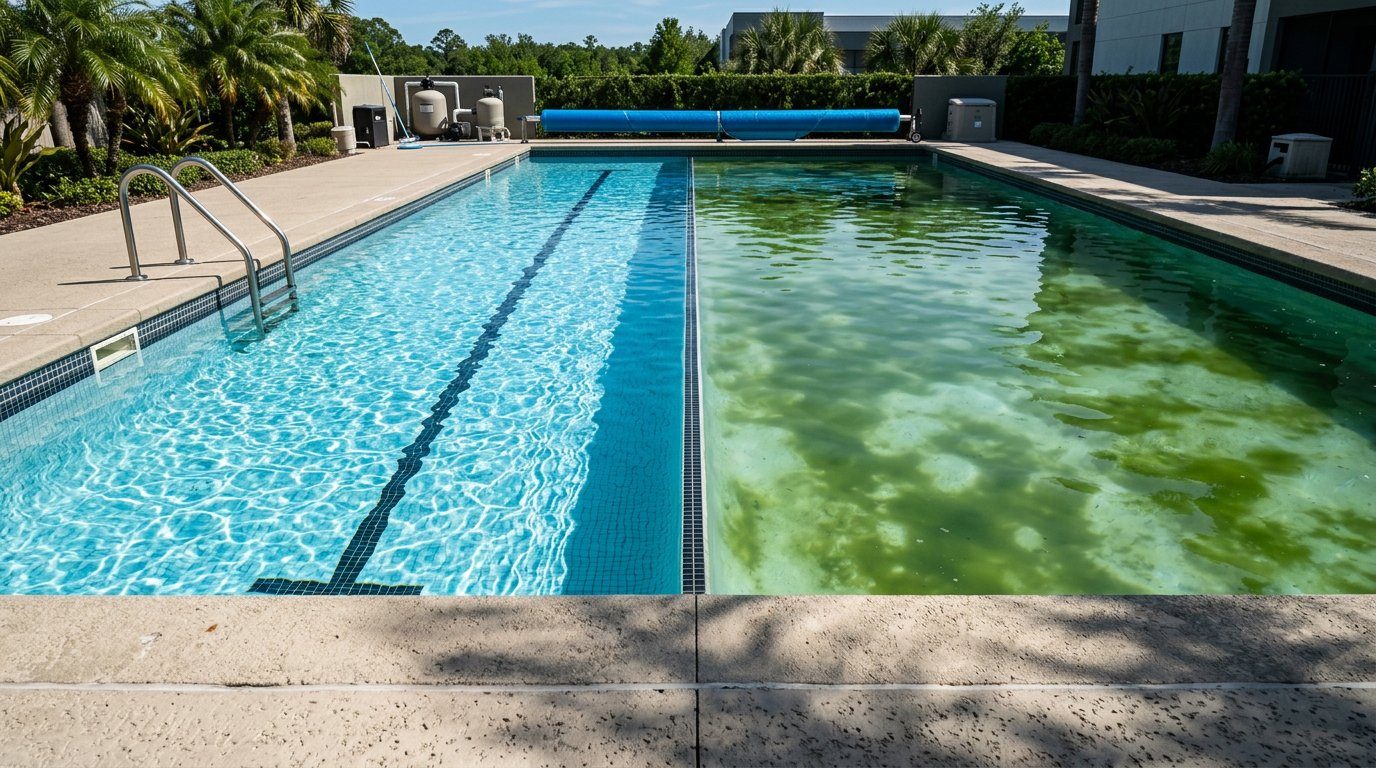
When pool water turns hazy, dull, or green, most owners blame chemicals first. But in many cases, pool filtration problems are the real reason water won’t stay clear—especially during heavy-use weeks and hot New Jersey weather.
Below, we’ll break down what your pool is trying to tell you, what to check first, and when it’s time to bring in a pro for water clarity issues.
Why Pool Filtration Problems Show Up as Cloudy or Green Water
Pool filtration problems are issues that prevent your circulation system from moving enough water through the filter to remove particles and keep sanitizer evenly distributed. When flow is weak—or the filter can’t trap what’s in the water—cloudiness builds fast, and algae can take hold.
Cloudy water is often tiny suspended debris (dust, pollen, dead algae, fine silt) that never gets captured. Green water is typically algae growth, which thrives when filtration and circulation aren’t keeping up with contaminants and sanitizer demand.
If you’re seeing recurring water clarity issues, it’s worth reviewing your circulation system as closely as your chemical readings. For ongoing care, our weekly pool maintenance services are designed to keep both chemistry and filtration working together.
Is Cloudy Pool Water in Lakehurst, NJ Usually a Filter Issue or a Chemical Issue?
Cloudy pool water in Lakehurst, NJ is often a filtration or circulation problem, especially when chlorine tests “normal” but the water still looks dull. A dirty filter, clogged baskets, air leaks, or short pump run times can all reduce turnover so fine particles stay suspended and sanitizer doesn’t circulate evenly.
Chemistry still matters, but here’s the practical reality: even perfectly balanced water can look cloudy if the filter isn’t catching debris or the pump isn’t moving enough water. In summer, that gets worse because pools see more swimmers, more sunscreen, more pollen, and more organic load.
If you want a simple routine that supports both water balance and equipment performance, grab our weekly maintenance checklist and use it as a quick standard for what should be checked consistently.
Common filtration-related causes of cloudy water
- Filter media is dirty, old, or channeling (water finds a “path” and bypasses proper filtering)
- Skimmer basket or pump basket is clogged, restricting flow
- Return jets are weak or mis-aimed, creating dead spots where debris settles
- Pump run time is too short for the season’s bather load and heat
- Air in the system (suction leak) reduces prime and overall circulation
What Does Green Pool Water in New Jersey Usually Mean?
Green pool water in New Jersey most often means algae, not “just a little discoloration.” Algae can start as a light green tint and progress quickly to full bloom if circulation is poor, the filter is overloaded, or sanitizer can’t stay consistent throughout the pool.
Algae is a symptom and a system test: it exploits weak circulation, dirty filters, and missed brushing in corners and on steps. If your pool turns green repeatedly, we recommend addressing the root cause rather than only reacting with chemicals. Our preventative and emergency services can help diagnose the equipment-side issue that keeps triggering the problem.
Why algae keeps coming back when filtration is struggling
- Low flow means sanitizer doesn’t reach all areas evenly
- Dirty filter can’t remove dead algae after treatment, so water stays dull
- Biofilm and debris in low-circulation zones protect algae colonies
- Backwashing or cleaning is delayed, reducing filter efficiency
How Can You Tell if Your Pool Filter Is Working Properly?
A healthy filter is noticeable: water improves day-by-day after brushing and vacuuming, and your pressure and flow stay consistent. When pool filtration problems appear, the water may look “stuck” in the same cloudy state even after you add sanitizer or clarifier.
Quick signs your filtration may be underperforming
- Weak return flow at the jets compared to normal
- Pressure gauge reads unusually high (dirty filter) or unusually low (circulation restriction, air leak, or pump issue)
- Cloudiness returns quickly after vacuuming
- Debris blows back into the pool through returns
- Algae appears in the same corners or on the same steps repeatedly
A simple circulation check you can do today
Stand at each return jet and compare the strength of flow. If one area is noticeably weaker, you may have a blockage, a valve issue, or a circulation imbalance. Also look for steady air bubbles at returns, which can suggest air entering the system on the suction side.
Which Filter Type Is Most Likely to Cause Water Clarity Issues When It’s Not Maintained?
All filters can lead to water clarity issues if they’re not maintained, but they fail in different ways:
- Cartridge filters can clog and reduce flow, leading to haze and poor circulation.
- Sand filters can channel or develop worn sand, letting fine particles pass through.
- DE filters can tear grids or develop bypass issues, reducing fine-particle capture.
What matters most isn’t the filter brand—it’s whether the system is sized right, maintained on schedule, and supported by good circulation habits. If you’re not sure what you have or how it should be performing, starting with a professional service plan from our pool and spa services team can prevent the recurring cycle of “treat, clear a bit, then cloud up again.”
What Should You Check First When Pool Water Turns Cloudy or Green?
Before you drain, panic, or dump in extra products, check the basics that most often connect directly to pool filtration problems.
1) Baskets and flow restrictions
Empty the skimmer basket and pump basket. A half-full basket can cut flow enough to create cloudy water, especially if the filter is already dirty.
2) Filter condition and cleaning schedule
Cartridges may need a full cleaning; sand/DE systems may need backwashing and/or internal inspection depending on symptoms. If water is green, the filter also has to remove the dead algae after treatment—so cleaning is often part of the recovery.
3) Run time and turnover
Hot weather, storms, and heavy swim weeks demand more circulation. If you recently reduced run time, cloudiness can show up within a day or two.
4) Circulation “dead spots”
Steps, tanning ledges, corners, and behind ladders are common algae staging areas. Brushing helps, but the long-term fix is better circulation and consistent filtration.
When Should You Call a Professional for Cloudy or Green Pool Water?
If you’ve cleaned baskets, confirmed the pump is running, and the water still won’t clear within a reasonable window—or it keeps coming back—you’re likely dealing with an equipment or system issue, not a one-time chemical adjustment.
It’s also smart to call for help when:
- The pressure gauge is abnormal and you’re unsure whether to backwash/clean
- You suspect a leak, air in the system, or plumbing restriction
- Your pool turns green repeatedly even with regular sanitizer
- You manage a facility and need consistent, documented water quality control
For commercial properties that need reliable clarity and uptime, our commercial pool services are built around consistent maintenance and fast troubleshooting.
Next Steps: Get to the Root Cause, Not Just the Symptoms
Cloudy water and algae are frustrating because they steal your time and confidence in the pool. The good news is that once pool filtration problems are corrected—flow restored, filter performance verified, and circulation optimized—clear water becomes much easier to maintain.
If you’re dealing with cloudy pool water in Lakehurst, NJ or recurring green pool water in New Jersey, we’re here to help you pinpoint the cause and fix it for the long run. Call Gorlin Pools & Spas at (732) 323-8200 or reach out through our contact page. If you already know you want service, you can also request a free quote and we’ll help you get back to crystal-clear water.
Common Questions About Pool Filtration Problems and Water Clarity in NJ
Can my pool be cloudy even if chlorine is high?
Yes. Cloudy water can persist even with high chlorine if the filter isn’t removing fine particles or if circulation is poor. Dead algae, pollen, and microscopic debris can stay suspended until filtration catches up. Checking baskets, pressure, and run time is often as important as testing chemicals.
How long should it take for a filter to clear cloudy pool water?
It depends on how cloudy the water is and whether the filter is functioning correctly. Mild haze may improve within 24–48 hours with good circulation and a clean filter. If the filter is dirty, undersized, or has internal issues, the water may stay cloudy until the filtration problem is fixed.
Why does my pool turn green after a storm?
Storms add contaminants like dirt, leaves, and runoff that increase sanitizer demand. If circulation is weak or the filter is already loaded, algae can take advantage quickly. After storms, longer run times, basket checks, and prompt filter cleaning can help prevent green pool water in New Jersey.
Is backwashing always the right fix for water clarity issues?
Not always. Backwashing helps sand and DE filters when pressure is high, but it won’t fix channeling, worn media, or broken internal components. Cartridge filters don’t backwash and instead need a proper cleaning. If you’re unsure, a professional check can prevent wasted time and repeated cloudiness.
What’s the best way to prevent recurring pool filtration problems?
The most reliable prevention is consistent maintenance: keep baskets clear, clean the filter on schedule, brush trouble spots, and adjust pump run time during heat waves and heavy use. Many homeowners find that structured service, like weekly care, prevents small filtration issues from turning into ongoing water clarity problems.